Every time you pull into a gas station, a sophisticated, continent-spanning supply chain has already done an extraordinary amount of work on your behalf. The gasoline in the pump may have started as crude oil extracted from a well three miles underground in West Texas, traveled through hundreds of miles of pipeline to a refinery near Houston, been processed alongside crude from Canadian oil sands, and then shipped through another 1,200 miles of pipeline to the distribution terminal a few miles from your home.
Most Americans have no idea where their fuel comes from — and understandably so. The system is massive, largely invisible, and operates around the clock. But understanding it matters: it explains regional price differences, helps you anticipate shortage risks, and illuminates why pipeline politics, refinery fires, and Canadian trade policy directly affect the cost of your commute.
Here is a complete breakdown of where US fuel comes from — from the wellhead to the pump.
Domestic Production: The Foundation
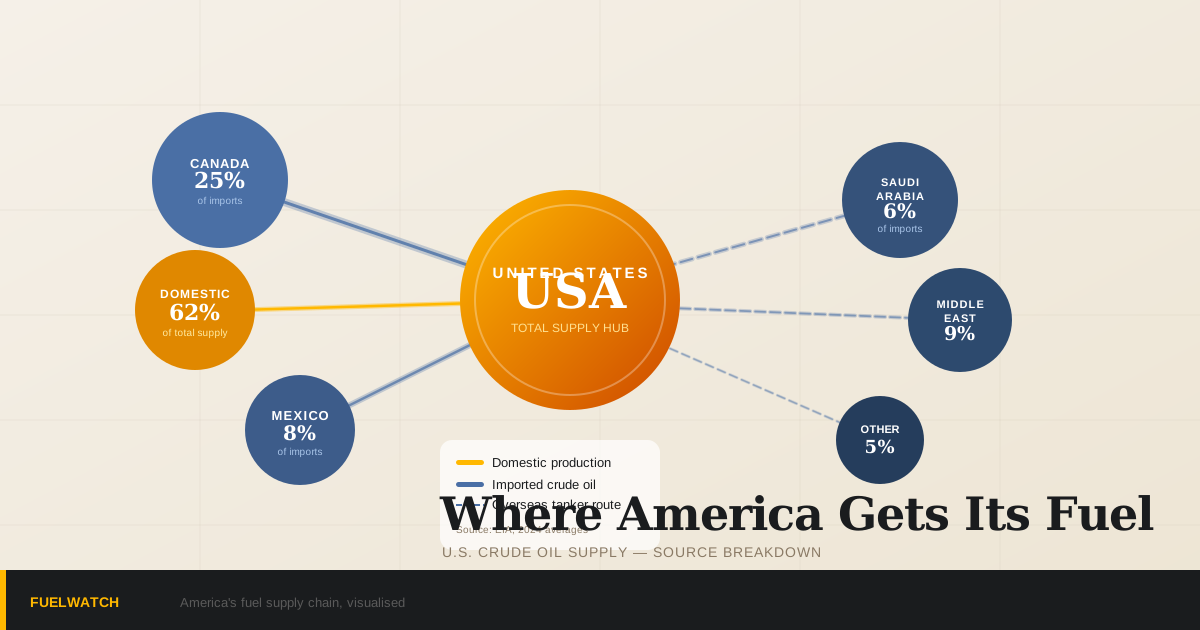
The single largest source of US fuel supply is domestic crude oil production. Thanks to the shale revolution that began in the late 2000s, the United States now produces more oil than any nation on Earth — roughly 13.2 million barrels per day as of 2024. Domestic production provides approximately 60–65% of the crude oil that US refineries process.
The US Oil-Producing Regions — By the Numbers
Where US oil actually comes from:
- Permian Basin (West Texas / Eastern New Mexico): ~5.8 million b/d — the single largest producing region in US history. Spans 86,000 sq. miles. Multiple stacked formations (Wolfcamp, Bone Spring, Delaware Basin) that can be drilled repeatedly.
- Gulf of Mexico (Federal Offshore): ~1.9 million b/d — deep-water platforms, including fields like Mars, Thunderhorse, and Atlantis. Requires massive capital investment; production relatively stable.
- Bakken Shale (North Dakota / Montana): ~1.2 million b/d — the play that launched the shale revolution. Light, sweet crude from the Williston Basin.
- Eagle Ford Shale (South Texas): ~1.1 million b/d — near existing Gulf Coast refinery infrastructure; produces both oil and natural gas liquids.
- Niobrara / DJ Basin (Colorado / Wyoming): ~650,000 b/d — serves Rocky Mountain refineries; also produces significant natural gas liquids.
- Alaska North Slope: ~460,000 b/d — includes Prudhoe Bay and newer fields; far below its 1988 peak of 2 million b/d but still significant; connected to Valdez by the Trans-Alaska Pipeline System (TAPS).
- Appalachian Basin (WV / PA / OH): Primarily natural gas (Marcellus Shale) with some oil; a key source of natural gas for the East Coast.
Crude Oil Imports: Who Fills the Gap
Despite record domestic production, US refineries still import crude oil — primarily because the type of crude they process doesn't perfectly match the type the US produces. Most Gulf Coast refineries were built or retrofitted to process heavy, sour crude (like Canadian oil sands and Mexican crude), while US shale production is primarily light, sweet crude. Importing the right type of crude for each refinery is often more efficient than retooling the entire refining system.
Where US Crude Oil Imports Come From
Top crude oil import sources (2023 data from EIA):
- 🇨🇦 Canada: ~3.9 million b/d (~60% of total imports) — The dominant US supplier by a huge margin. Primarily Alberta oil sands crude and conventional crude from Saskatchewan. Ships via the Keystone Pipeline, Enbridge Line 3, Line 5, and others.
- 🇲🇽 Mexico: ~700,000–900,000 b/d — Mexico's state oil company PEMEX ships heavy crude from the Cantarell and Ku-Maloob-Zaap fields primarily to Gulf Coast refineries configured for heavy oil processing.
- 🇸🇦 Saudi Arabia: ~450,000–600,000 b/d — Saudi Aramco ships Arab Light and Arab Medium to US refineries, particularly those on the Gulf Coast operated or supplied by Saudi Aramco's US subsidiary, Motiva Enterprises.
- 🇮🇶 Iraq: ~350,000–450,000 b/d — Heavy, sour crude complementing Gulf Coast refinery configurations.
- 🇨🇴 Colombia: ~200,000–250,000 b/d — Castilla and Vasconia heavy crudes; important to Gulf Coast refiners.
- Ecuador, Brazil, Libya, Nigeria: Smaller but consistent suppliers at 50,000–150,000 b/d each
"The US-Canada energy relationship is the world's largest bilateral energy trading partnership. The volumes flowing between these two countries dwarf any other cross-border energy relationship on Earth." — Canadian Association of Petroleum Producers
The Refining System: Where Crude Becomes Fuel
Raw crude oil cannot be put directly into a car. It must first be processed at a refinery, where it is heated, separated into different fractions, and chemically converted into gasoline, diesel, jet fuel, heating oil, and dozens of other products. The United States has the world's largest refining capacity — and its geographic concentration in the Gulf Coast creates both efficiencies and vulnerabilities.
America's Refining Heartland: The Gulf Coast
How the US refining system is structured:
- The US has approximately 130 operating refineries, with the largest concentrated in the Gulf Coast (PADD 3 region: Texas, Louisiana, Mississippi, Alabama)
- Gulf Coast refineries process roughly 50% of all US fuel — a geographic concentration that makes hurricane season a major annual price risk
- Major refining hubs: Houston-Texas City-Beaumont corridor (TX), Baton Rouge-New Orleans corridor (LA), Philadelphia area (PA), Los Angeles Basin (CA)
- PADD regions (Petroleum Administration for Defense Districts) define how the US is divided for fuel distribution purposes:
- PADD 1 (East Coast): Limited domestic refining; depends heavily on Colonial Pipeline from Gulf Coast
- PADD 2 (Midwest): Major refining using Canadian and Midcontinent crude; includes Chicago hub
- PADD 3 (Gulf Coast): Largest refining region; produces fuel for East Coast, Midwest, and exports
- PADD 4 (Rocky Mountain): Largely self-sufficient with regional crude
- PADD 5 (West Coast): Isolated market due to limited pipeline connections; California requires unique fuel blends
- Refineries typically run at 85–93% capacity; any major unplanned outage creates immediate regional price spikes
The Pipeline Network: America's Invisible Fuel Highway
Moving crude oil from wellhead to refinery, and then moving refined fuel from refinery to gas station, requires one of the most extensive pipeline systems ever built. The US has approximately 190,000 miles of liquid petroleum pipelines — enough to circle the Earth more than seven times.
The Arteries of American Fuel Supply
The critical pipelines powering American fuel supply:
- Colonial Pipeline: 5,500 miles from Houston, TX to Linden, NJ. Carries over 100 million gallons/day of gasoline, diesel, and jet fuel to the Southeast and East Coast. Its 2021 ransomware shutdown triggered immediate gas shortages across 17 states — demonstrating how central this single artery is to East Coast fuel supply.
- Keystone Pipeline System: Transports Canadian heavy crude from Alberta, Canada to refineries in Illinois and Oklahoma, and to the Gulf Coast. Key link in the US-Canada energy relationship.
- Enbridge Line 3 and Line 5: Additional Canadian crude import pipelines through Minnesota and Michigan. Line 5 runs through the Great Lakes — a subject of ongoing environmental controversy.
- Dakota Access Pipeline (DAPL): Moves North Dakota Bakken crude south to Illinois for distribution to Midwest refineries and beyond.
- Trans-Alaska Pipeline System (TAPS): 800-mile pipeline carrying Alaskan North Slope crude from Prudhoe Bay to the ice-free port of Valdez. Was once the largest pipeline project in history.
- Explorer Pipeline: Carries refined products from the Gulf Coast to Chicago and beyond — the Midwest's primary connection to Gulf refinery output.
"Pipeline disruptions immediately expose the fragility of the regional fuel supply chains most Americans don't think about until they're standing at a gas station with a 'no fuel' sign." — API, Pipeline Infrastructure Report
The Renewable Fuel Mandate: Ethanol's Role in the Gas Tank
Since 2005, the Renewable Fuel Standard (RFS) has required that transportation fuel sold in the US contain a minimum volume of renewable fuels — primarily corn-based ethanol. As a result, virtually all US gasoline contains 10% ethanol (E10). This mandate affects the supply chain, price, and energy content of every gallon sold in America.
The 10% You Probably Don't Think About
Ethanol in the US fuel supply:
- The US produces about 15.4 billion gallons of ethanol annually, nearly all from corn grown in Iowa, Illinois, Nebraska, Minnesota, and South Dakota
- E10 (10% ethanol) is the standard US gasoline. E85 (85% ethanol) is available at some stations for flex-fuel vehicles.
- Ethanol contains about 34% less energy per gallon than pure gasoline, meaning E10 blends give slightly lower fuel economy than pure gasoline would
- The RFS mandates increasing volumes of ethanol and other renewables each year, set by the EPA. Refiners who don't blend enough must purchase "Renewable Identification Numbers" (RINs) — a compliance credit system that adds to refiner costs
- Corn price spikes (like those caused by droughts) can indirectly raise gasoline prices by increasing ethanol production costs
- E15 (15% ethanol) is approved year-round in most states as of 2023, following a Biden administration waiver — available at select stations and typically 5–10 cents cheaper per gallon