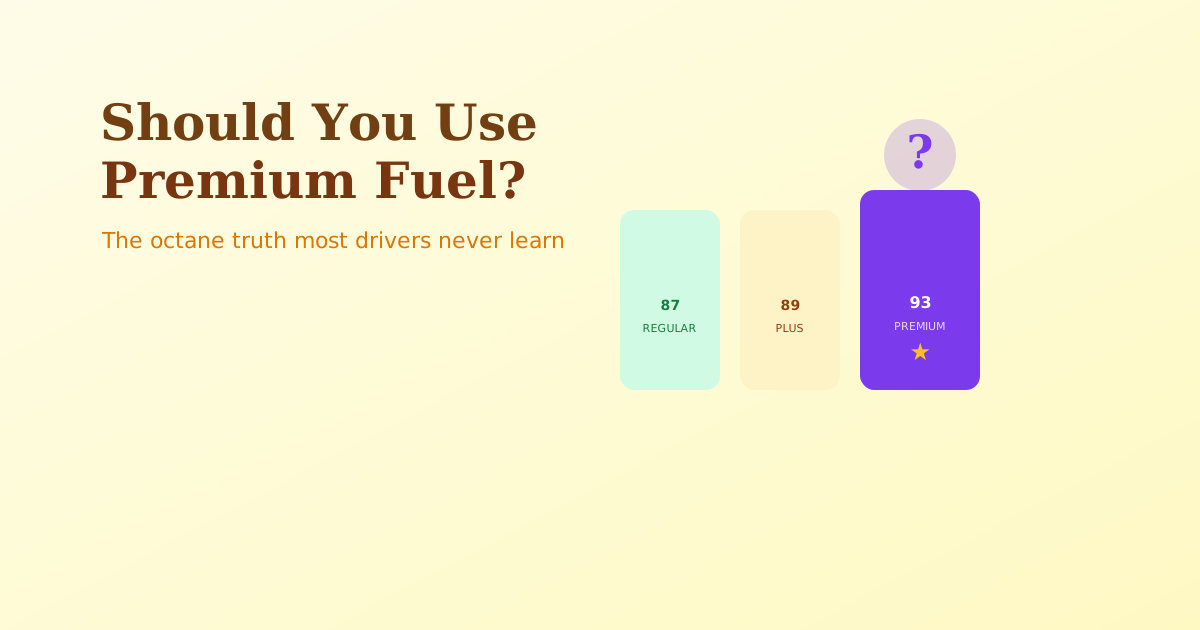
Premium fuel costs 25–40 cents per gallon more than regular. For a driver who fills up 50 gallons per month, using premium unnecessarily costs $150–$240 per year with zero benefit. Yet millions of drivers pay for premium in vehicles that don't need it.
Here's the complete guide to octane ratings, what your specific vehicle needs, and when premium is worth the premium — and when it absolutely isn't.
What Octane Actually Means
Octane Rating Explained Simply
Octane rating (officially AKI — Anti-Knock Index) measures a fuel's resistance to engine knock — premature ignition of the fuel-air mixture before the spark plug fires. Knock sounds like a pinging or rattling noise and, in severe cases, can damage pistons and cylinder walls.
High-compression and turbocharged engines generate higher cylinder pressures that can trigger knock with lower-octane fuel. Using higher-octane fuel in these engines prevents knock and allows the engine to operate at its designed compression and timing settings.
In a regular-spec engine with lower compression, the cylinder pressures never reach knock threshold with 87 octane fuel. Using premium in these engines provides no benefit whatsoever — the extra octane resistance is simply never needed.
The Three Labels and What They Mean
Every vehicle owner's manual specifies one of three fuel requirements:
- "Regular Unleaded" or "87 Octane Minimum" — Use regular (87 AKI). Premium provides no benefit. This covers roughly 70% of US vehicles.
- "Premium Recommended" or "91 Octane Recommended" — You can use regular safely. The engine has knock sensors that retard timing when it detects potential knock. You may experience a slight performance reduction and 1–3% lower MPG. Premium is optional; use it only if you notice performance issues. This covers roughly 20% of US vehicles.
- "Premium Required" or "91 Octane Required" — Use premium every time. These engines are tuned for high-compression operation that depends on premium fuel. Sustained use of regular can cause knock damage, reduced performance, and long-term engine wear. This covers roughly 10% of US vehicles (typically high-performance or luxury models).
How to Know What Your Car Needs
- Check the fuel door — most modern vehicles have a sticker on the inside of the fuel door stating the octane requirement or recommendation.
- Check the owner's manual — the fuel section specifies the requirement precisely.
- Check the instrument cluster — some luxury vehicles display a fuel recommendation on the dash.
What Cars Require Premium
Common categories of "Premium Required" vehicles:
Vehicle Segments That Typically Require Premium
- European luxury brands: Most Audi, BMW, Mercedes-Benz, Porsche, Volvo, and Jaguar models specify premium required.
- Performance American vehicles: Chevrolet Corvette, Ford Mustang Shelby GT500, Dodge Challenger/Charger SRT models.
- Turbocharged economy cars: Some versions of the Subaru WRX, Volkswagen GTI, and others require premium to deliver their rated output.
- Luxury SUVs: Many Range Rover, Porsche Cayenne, BMW X-series, and Mercedes GLE/GLS models.
- Sports cars: Virtually all dedicated sports cars (Ferrari, Lamborghini, Porsche 911, Chevrolet Camaro Z/28) require premium.
Mid-Grade: The Fuel Nobody Needs
Mid-grade (89 octane) is a retail invention. Almost no vehicle manufacturer specifies 89 octane as the target fuel. It exists to give stations a profitable middle tier, not because engines need it. If your car is a regular-spec car, buy regular. If it's premium-required, buy premium. Skip the 89.
The Math: Is Premium Ever Worth It?
For "Premium Required" engines: Yes — using regular can damage the engine and reduce output. The cost is worth it.
For "Premium Recommended" engines: Maybe — in vehicles where premium enables materially better performance (like a turbocharged BMW), some drivers choose premium for driving enjoyment. But if you're focused purely on fuel cost, regular is safe and saves $150–$240/year.
For regular engines: Absolutely not — using premium in a regular engine is wasting $150–$240/year for zero return.